Industrial Infrastructure Survey

Oil & Gas
Drone Survey

Comprehensive aerial surveys for oil and gas pipelines, refineries, storage facilities, and offshore platforms — delivering asset data, leak detection, and right-of-way mapping safely and efficiently.
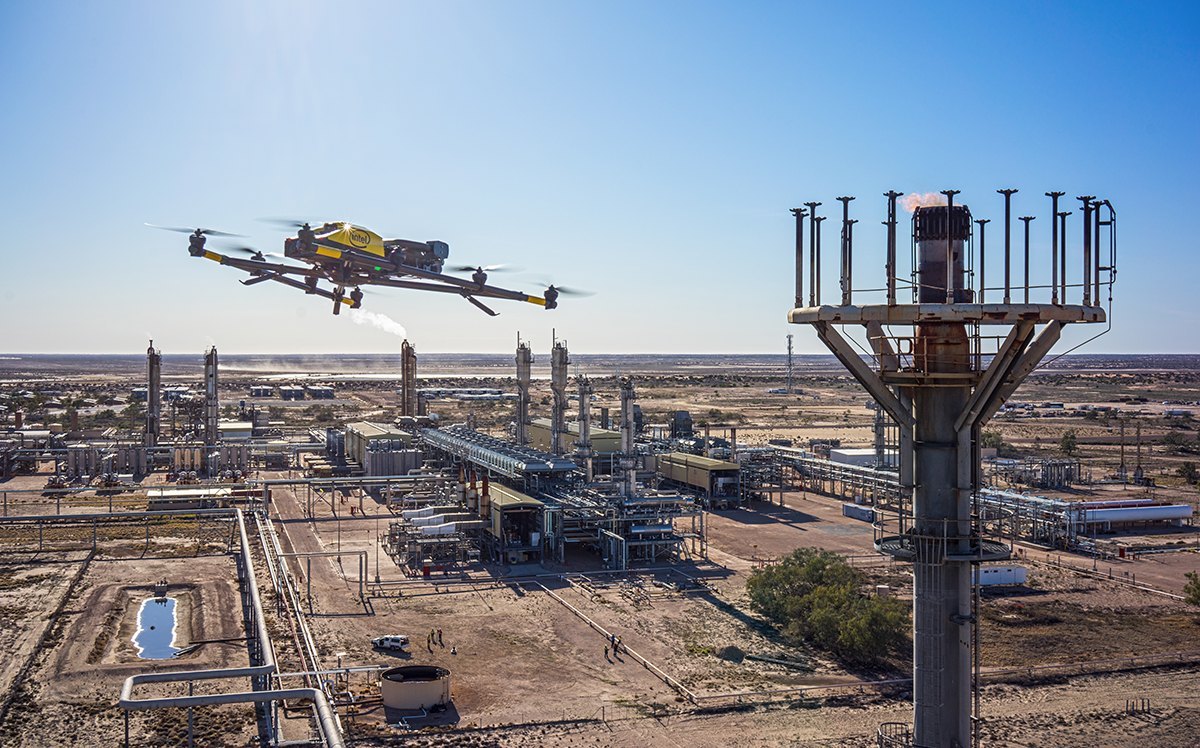
Oil gas aerial survey
Pipeline ROW SurveyLeak DetectionRefinery InspectionFlare Stack SurveyEncroachment MappingTank Farm SurveyCorrosion Detection Pipeline ROW SurveyLeak DetectionRefinery InspectionFlare Stack SurveyEncroachment MappingTank Farm SurveyCorrosion Detection
Service Overview

Drone Surveys for
Oil & Gas Assets

Oil and gas infrastructure spans thousands of kilometres of pipelines, remote refineries, and hazardous processing facilities. Traditional inspection methods expose workers to dangerous environments, while delivering slow and incomplete data. Our drone surveys cover vast assets quickly, safely, and with thermal imaging that detects issues invisible to the human eye.

A 200 km pipeline corridor that requires a 3-person ground team 10 days to patrol can be fully surveyed by our drone in 1 day — with thermal leak detection and encroachment mapping included.

  • 200+ km pipeline corridor per day
  • Thermal imaging for leak and hot-spot detection
  • Encroachment and third-party activity detection
  • Flare stack and tall structure inspection
  • Corrosion and coating failure detection
  • OISD, PNGRB, and operator standard compliant
Oil pipeline aerial
Applications

Where We Apply This Service

Pipeline ROW Patrol

Regular aerial patrol of cross-country oil and gas pipeline corridors — third-party encroachment, earth movement, illegal tapping, and ROW condition monitoring.

ROWPatrol
Thermal Leak Detection

Thermal drone inspection for gas and liquid leaks along pipelines and at facility sites — detecting temperature anomalies indicating leaks before they become critical.

ThermalLeak
Refinery & Facility Inspection

Aerial inspection of refinery units, distillation columns, storage tanks, cooling towers, and flare stacks for structural issues and corrosion mapping.

RefineryTanks
Pipeline Route Survey

Pre-construction corridor surveys for new pipeline projects — terrain mapping, land use, crossing identification, and environmental sensitivity mapping.

RoutePre-construction
Emergency Response Survey

Rapid post-incident aerial assessment for pipeline ruptures, facility fires, and spill events — providing real-time situational awareness for emergency response teams.

EmergencyIncident
Security Perimeter Monitoring

Regular aerial security patrols of critical oil and gas infrastructure perimeters — detecting intrusions, fence breaches, and unauthorised access.

SecurityPerimeter
How It Works

Our Survey Process

Safety is paramount near oil and gas infrastructure. All operations follow OISD, DGCA, and operator HSE protocols.
01
Asset Details & Hazard Assessment

We review pipeline specifications, facility P&IDs, HAZOP reports, and define safe operating zones for drone operations near pressurised systems.

02
HSE Clearance & Permits

All required hot work and cold work permits, DGCA airspace permissions, and operator HSE clearances are obtained before operations begin.

03
Sensor Configuration

RGB + thermal camera payloads are configured for the specific inspection objective — leak detection requires different settings than structural corrosion mapping.

04
Aerial Data Capture

Systematic corridor or facility flights capture complete coverage. Real-time thermal monitoring allows immediate alert for critical anomalies during the flight.

05
Analysis & Anomaly Reporting

Thermal and RGB data is processed to identify and classify anomalies — leaks, corrosion, encroachments, and structural defects are GPS-tagged with severity ratings.

06
Operator Report Delivery

Inspection report with anomaly maps, GPS coordinates, thermal images, and priority maintenance list delivered within 48 hours in operator-compatible formats.

What You Get

Survey Deliverables

Corridor Map

Pipeline ROW orthomosaic map

Thermal Report

Leak & hotspot thermal analysis

Anomaly Map

GPS-tagged anomaly location map

Encroachment Report

Third-party activity documentation

3D Facility Model

Photogrammetric 3D asset model

OISD Report

Standards-compliant inspection report

Technical Specs

Equipment & Accuracy

UAV: Fixed-wing for corridors, multi-rotor for facilities
Thermal: FLIR 640×512 uncooled IR sensor
RGB: 20MP
Pipeline Coverage: 150–200 km/day
Thermal Sensitivity: ±0.5°C NETD
Formats: PDF, KMZ, GeoTIFF, XLSX, TIFF
Standards: OISD, PNGRB, ISO 19901 compliant
Frequently Asked

Oil & Gas Survey FAQs

Is drone operation safe near oil and gas installations?
Yes, when operated by trained professionals following OISD and DGCA protocols. We use intrinsically safe UAV platforms where required, maintain safe distances from pressurised equipment, and coordinate with facility safety officers for all operations.
Can drones detect gas leaks?
Thermal drones detect temperature anomalies caused by gas expansion (Joule-Thomson effect) which creates cold spots. For direct gas sensing, we deploy UAVs equipped with methane/hydrocarbon gas detectors for positive leak confirmation.
Can you inspect flare stacks and tall structures?
Yes. Our drones can safely inspect flare stacks, distillation columns, and elevated structures up to 150m height — eliminating the need for scaffolding or rope access and providing complete 360° photogrammetric models.
How frequently should pipelines be patrolled by drone?
PNGRB and OISD recommend regular patrolling — typically monthly for high-consequence areas and quarterly for standard segments. We offer drone patrol contracts with regular scheduled flights and immediate anomaly reporting.
Can you survey subsea or offshore assets?
We provide aerial surveys for offshore platform topsides, flare booms, and jacket structures from helicopter-deployed or vessel-launched platforms. For subsea assets, we partner with ROV operators for integrated inspection solutions.
Start Your Project

Need an Oil & Gas
Drone Survey?

Share your asset details and get a custom quotation within 24 hours. DGCA licensed, OISD compliant.